Epoxy and polyaspartic are both garage floor coatings, but they're different chemistries. Epoxy is slower to cure and can yellow in sunlight; polyaspartic (a type of polyurea) cures in hours, stays flexible, and resists UV fading — which is why we use polyaspartic systems for nearly every Tulsa install instead of a standard epoxy kit. Both terms get used interchangeably in everyday search, so this guide compares them honestly.
If you've been searching "epoxy flooring Tulsa" or "garage epoxy Tulsa," you're not wrong to use that term — for most homeowners, "epoxy" has become shorthand for any garage floor coating, the same way people say "Kleenex" for tissues. But the coating systems available today aren't all epoxy, and the differences actually matter for how your floor holds up. Below, we break down what each system actually is, how they compare, and which one makes more sense for a Tulsa garage.
What Is Epoxy Garage Floor Coating?
Epoxy is a two-part resin coating that's been the standard for garage floors for decades. It's widely available in DIY kits from home improvement stores, and plenty of contractors still install it. Properly applied, epoxy creates a hard, glossy surface that resists stains and everyday wear.
The tradeoffs: epoxy cures slowly (often 3-7 days before it's fully ready for vehicle traffic), it's more rigid so it's prone to cracking as concrete naturally shifts, and it's not UV-stable — meaning it can yellow or turn amber over time, especially near a sunlit garage door.
What Is Polyaspartic (Polyurea) Garage Floor Coating?
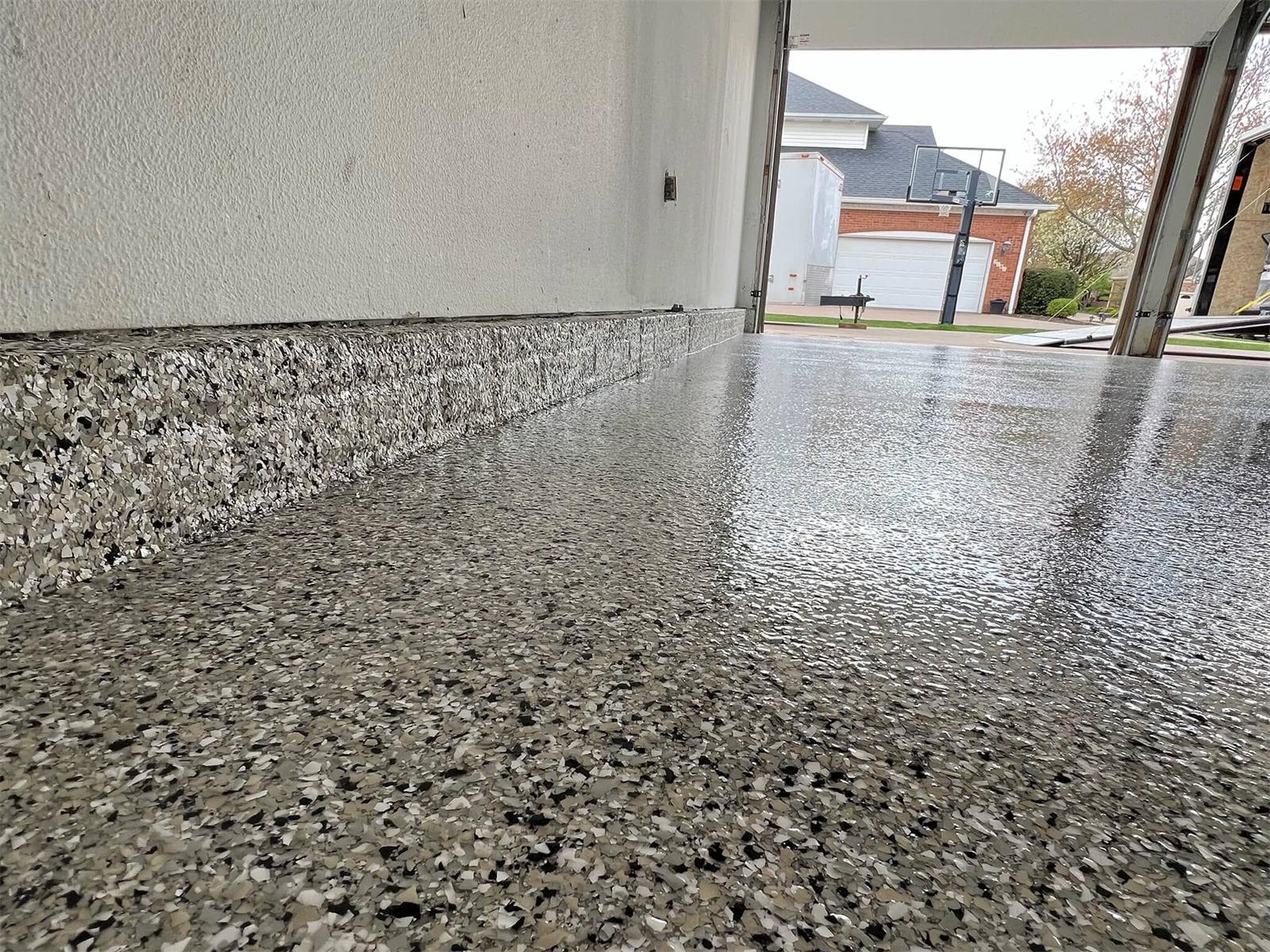
Polyaspartic is a type of polyurea coating — a more advanced chemistry that cures much faster and stays flexible after curing. Instead of one thick coat, it's typically applied as a multi-layer system: a diamond-ground surface, a polyurea base coat, a full broadcast of decorative flake, and a clear polyaspartic topcoat that seals everything in. You can read more about that exact process on our polyurea & polyaspartic systems page.
Because it's UV-stable, it holds its color under direct sunlight instead of yellowing, and because it stays flexible, it handles the freeze-thaw and temperature swings Oklahoma throws at a garage slab better than a rigid epoxy layer.
Epoxy vs. Polyaspartic: Side-by-Side
| Property | Standard Epoxy | Polyaspartic / Polyurea |
|---|---|---|
| Cure Time | Several days before normal use | Cures in hours — walk-on next day, drive-on in 48 hrs |
| UV Stability | Yellows & chalks in sunlight | UV-stable — holds color outdoors and near garage doors |
| Flexibility | More rigid, prone to cracking | Flexible — handles concrete movement |
| Hot-Tire Pickup Resistance | Can soften & lift under hot tires | Formulated to resist hot-tire pickup |
| Typical Install Time | 1-2 days plus multi-day cure wait | 1-2 days, ready to use much sooner |
| Best For | Budget indoor-only projects | Garages, driveways, patios, commercial floors |
Which Should You Choose for a Tulsa Garage?
Tulsa's climate is part of why this decision matters more here than it might elsewhere. Summers bring intense, direct sun on west- and south-facing garage doors, and the temperature can swing more than 40 degrees between a winter morning and afternoon. A rigid, UV-sensitive coating has to work harder to hold up under that than a flexible, UV-stable one does.
For a strictly indoor space with a tight budget and no urgency, a basic epoxy kit can still get the job done. But for most homeowners who want a floor that looks the same in five years as it does on day one — without yellowing, without cracking at the first freeze, and without losing a weekend waiting for it to cure — polyaspartic is the system we recommend and the one we install on nearly every garage floor coating project. If you're wondering exactly what that cure-time difference means in practice, see our breakdown of how long before you can park on a coated garage floor.
Frequently Asked Questions
Is polyaspartic more expensive than epoxy?
Usually yes, per square foot — polyaspartic material costs more than a basic single-part epoxy kit. Most homeowners find it pays for itself through longer life and less risk of needing to redo the floor in a few years.
Can polyaspartic be applied over an existing epoxy floor?
In many cases, yes, if the existing epoxy is well-bonded and in good condition. If it's already peeling or lifting, it typically needs to be ground off first so the new coating bonds directly to the concrete.
Is polyaspartic just a marketing term for epoxy?
No — they're different chemistries. Epoxy and polyaspartic cure through different chemical reactions, which is what gives polyaspartic its faster cure time and better UV stability. Many people use "epoxy" as a general term for any garage floor coating, but the systems themselves are not the same.
Which lasts longer, epoxy or polyaspartic?
Properly installed, both can last many years, but polyaspartic's added flexibility and UV resistance generally make it more resistant to cracking, yellowing, and chipping over time — especially in a climate with big temperature swings like Tulsa's.